Our Facilities
Laboratory of Hybrid Technologies
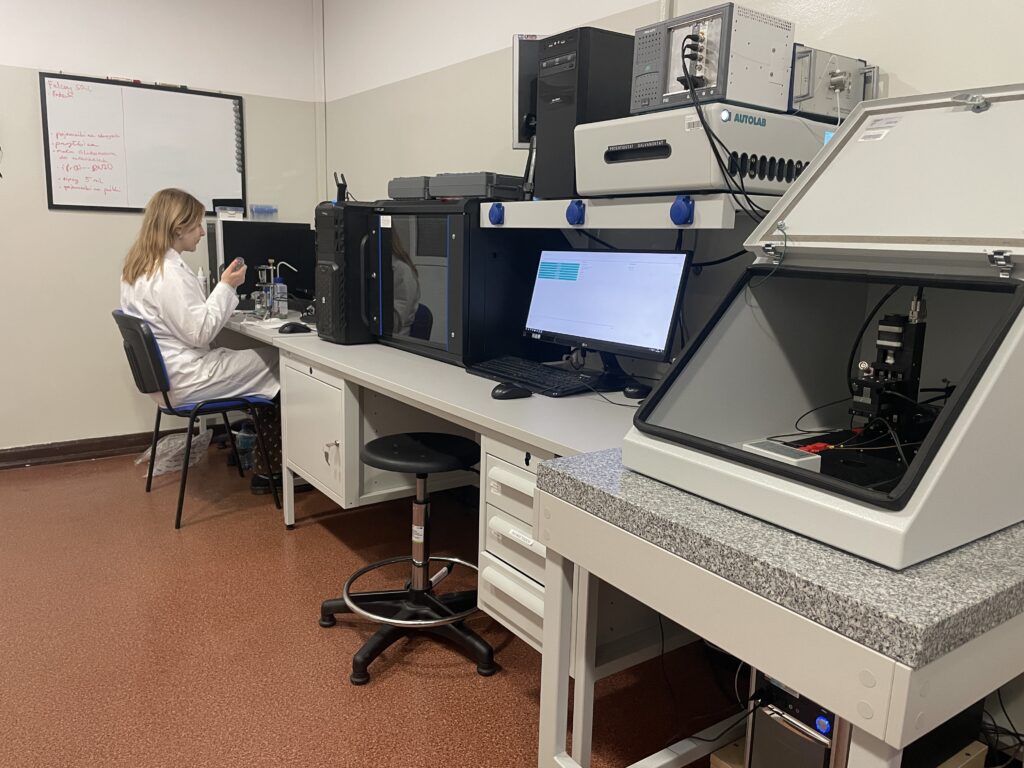
This laboratory integrates additive manufacturing with electrochemical screening to enable rapid prototyping and evaluation of functional sensors and responsive materials. The research combines microfabrication, precision deposition, and electrochemical diagnostics to shorten the development cycle from concept to tested device.
Printing and patterning techniques are used to produce complex electrode architectures, flexible substrates, and hybrid polymer–metal systems tailored for environmental and biomedical sensing applications.
The laboratory’s infrastructure enables real-time analytical feedback during fabrication and testing. A potentiostat with dynamic EIS capabilities (Autolab) and an integrated SECM system provide spatially resolved electrochemical mapping. Supporting tools include a laser plotter for microstructuring, a sonoplotter for precise material deposition, and portable multiplexer-based systems (PalmSens) for parallel sensor measurements.
Laboratory head: Dr. Tomasz Swebocki
Laboratory of Advanced Electrochemical Analysis
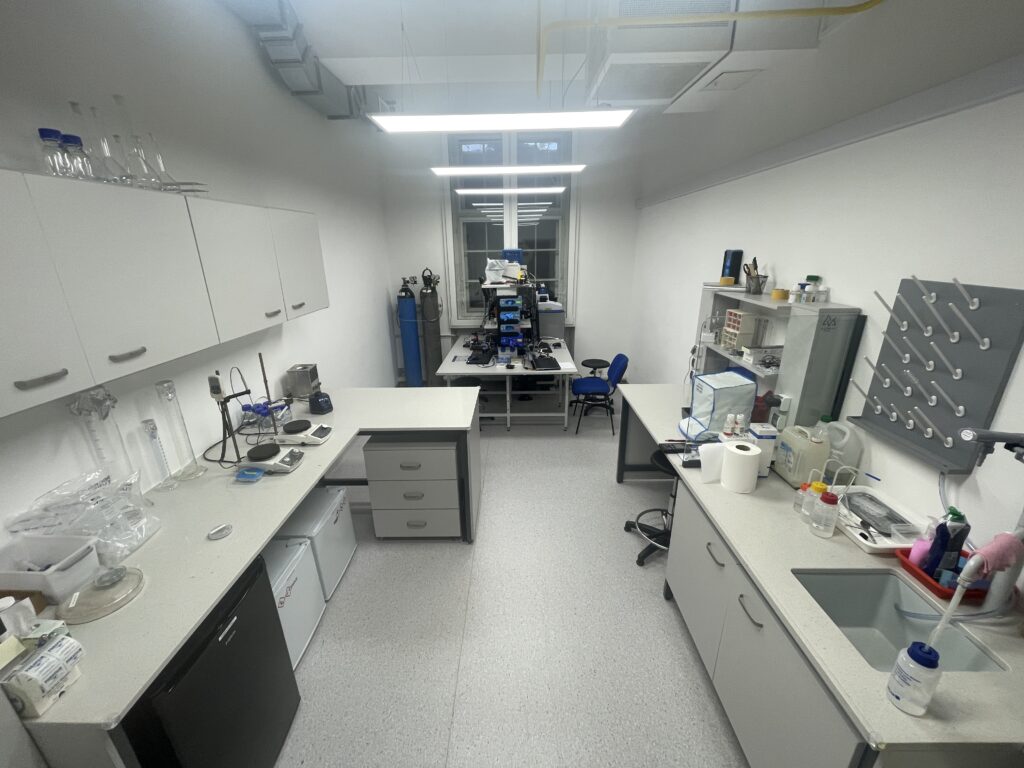
Our cutting-edge laboratory bridges materials science and engineering, focusing on the design and development of electroresponsive materials and biosensors. Research activities combine advanced electrochemical techniques with materials engineering to explore surface modification, impedance spectroscopy, and electrochemical sensing in complex environments.
The lab operates as a hybrid research-development space, emphasizing applications in environmental sensing and medical diagnostics. Close collaboration with the biological laboratory enables the validation of electrochemical devices under realistic biological conditions.
Base equipment includes a potentiostat with full EIS capabilities (BioLogic), a Raman microscope (Horiba), and complementary infrastructure for electrode preparation, gel-based matrix fabrication, and DES-system studies.
Laboratory head: Angelika Łepek
Laboratory of Bio- and Nanomaterial Interactions with Microorganisms (BSL-2+)
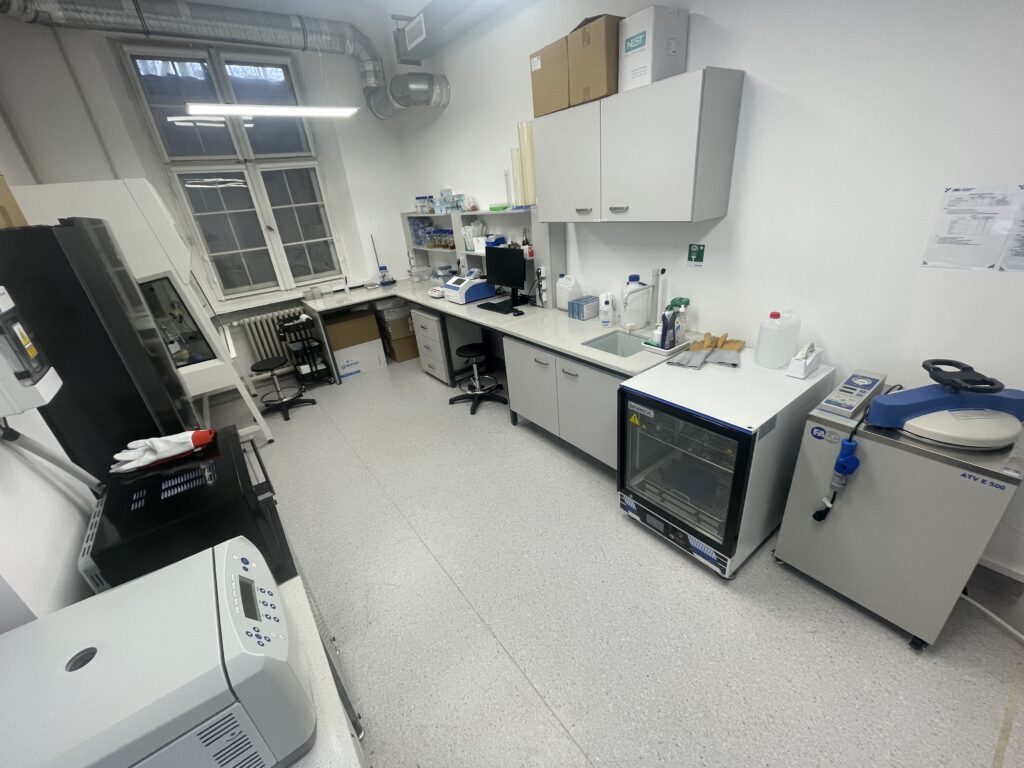
Our BSL-2+ class biological laboratory is dedicated to studies focused on the investgiation of the interactions between bio- and nanomaterials with various microbes. The general testing covers, among others, antimicrobial properties testing, developement of real-time detection system of pathogenic bacteria, and biofouling studies.
The facility also enables the fabrication and characterization of experimental coatings, hydrogels, and electrode materials under controlled biological conditions. Integrated analytical tools support the assessment of cell adhesion, biofilm formation, and metabolic activity in contact with functional materials.
Base equipment: class 2 laminar flow hood (Telstar), autolab potentiostat (Metrohm), dynamic and static incubator (Biobase), cooled cetrifuge (Eppendorf), low termperature freezer (Midea), microplate reader with incubation (Allsheng), etc.
Laboratory head: Dr. Tomasz Swebocki
Laboratory of Electrical Properties Measurement
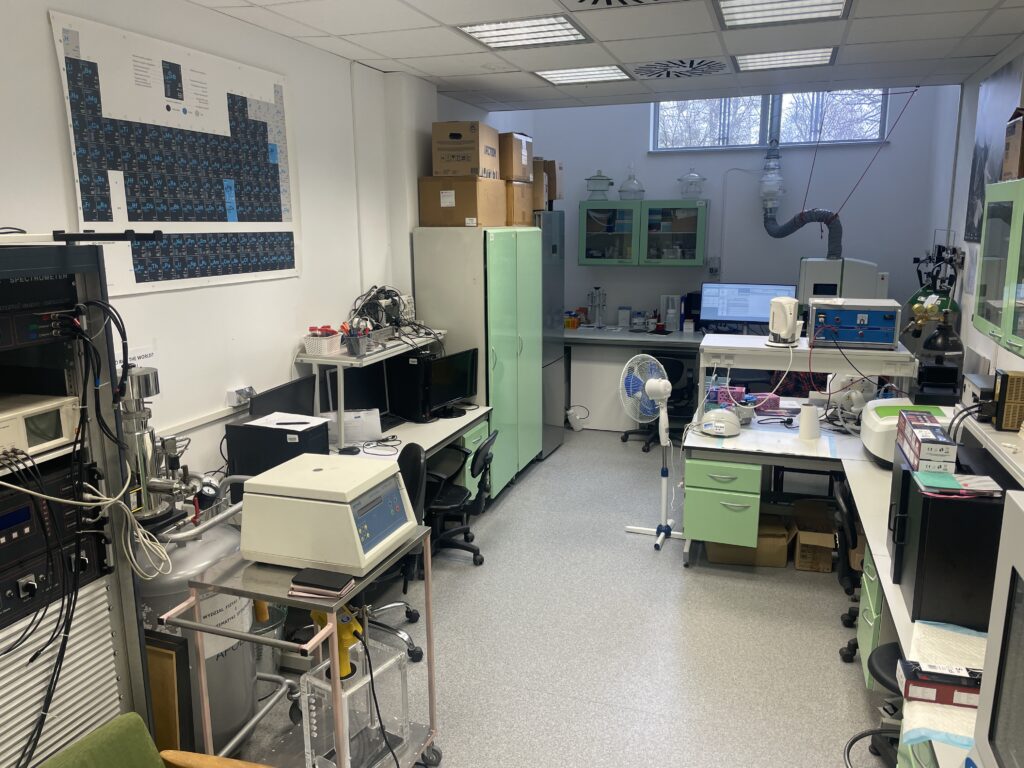
Our Electrical Properties Measurement Laboratory is dedicated to the investigation of electrical, dielectric, and optical properties of advanced materials under controlled experimental conditions. The laboratory supports studies focused on the characterization of functional materials, including polymers, coatings, and nanostructured systems, with particular emphasis on their electrical behavior, conductivity, and dielectric response across a broad range of frequencies and temperatures.
The facility enables precise analysis of materials subjected to controlled environmental conditions, including thermal cycling and simulated solar radiation. Integrated analytical techniques allow for the evaluation of chemical composition, optical properties, and electrochemical performance of materials, supporting research in materials science, energy applications, and functional surface engineering.
Base equipment: broadband dielectric spectrometer with ultra heating-cooling system (Novocontrol), ICP-OES spectrometer (PerkinElmer), UV–Vis spectrophotometer (PerkinElmer), incubator (LabNet), mild synthesis setup, artificial sunlight simulator, and potentiostat (Gamry).
Laboratory head: Prof. Natalia Wójcik
Additional Facilities of the Institute
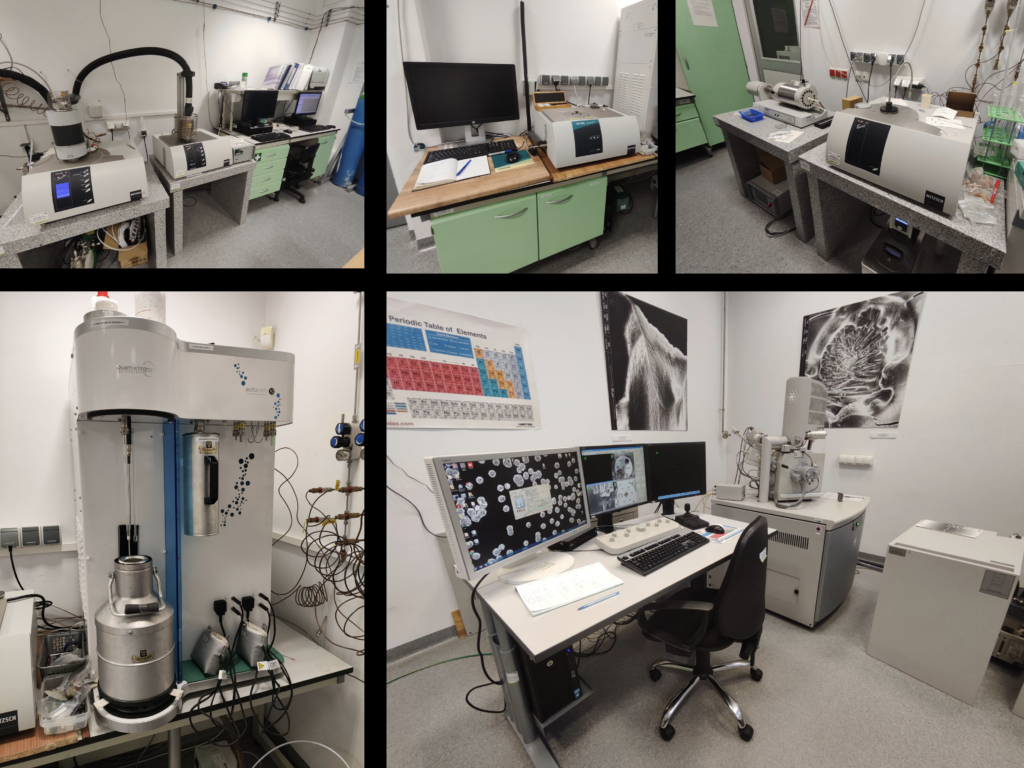
The institute also provides access to complementary analytical facilities supporting advanced materials characterization. These include scanning electron microscopy with energy-dispersive X-ray spectroscopy (SEM-EDX, FEI) for surface and elemental analysis, thermogravimetric analysis (TGA) and differential scanning calorimetry (DSC) for thermal characterization, as well as BET surface area analysis for the evaluation of porosity and specific surface area of materials.